
AquariumAquaristik
Tanganyika cichlid (Helianthus, wild-caught) – Neolamprologus helianthus | Bright yellow rock cichlid
Tanganyika cichlid (Helianthus, wild-caught) – Neolamprologus helianthus | Bright yellow rock cichlid
Couldn't load pickup availability
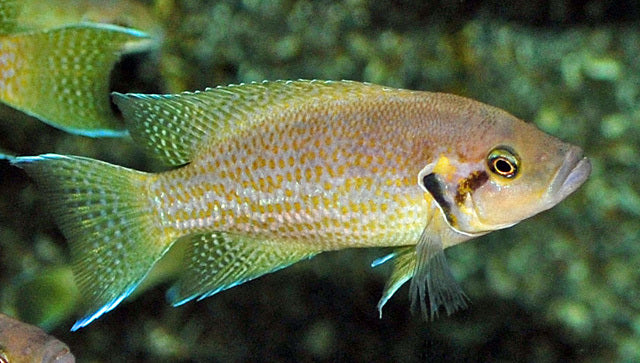
The Tanganyika cichlid Helianthus ( Neolamprologus helianthus ) is a beautiful, bright yellow rock-dwelling fish from Lake Tanganyika. This wild-caught variety is distinguished by its particularly intense coloration, clear markings, and vitality. The name "Helianthus" (sunflower) perfectly describes its radiant yellow color, which immediately catches the eye in any aquarium.
In the wild , Neolamprologus helianthus lives in the rocky shore regions of Lake Tanganyika, where it hunts small invertebrates and defends its territory. In the aquarium, it is lively, curious, and yet peaceful towards similarly sized tankmates. It displays particularly impressive social behavior during brood care.
🌿 Characteristics & Attitude:
🐟 Fish size: S (approx. 3–4 cm, juvenile)
🌍 Origin: East Africa (Lake Tanganyika) – Wild caught
🌡️ Temperature: 24-27°C
💧 pH value: 7.8–9.0
⚖️ Total hardness: 10–20 °dGH
🐠 Social behavior: Pair-forming, lively, territorial
🏞️ Aquarium: from 200 liters with sandy bottom, many rocks & crevices
🍽️ Feeding:
The Helianthus is an omnivore with a preference for animal-based food. Frozen and live foods such as brine shrimp, cyclops, or mysis shrimp are ideal. Fine cichlid granules or spirulina food can be offered as a supplement. A varied diet ensures vibrant colors and vitality.
💡 Tip:
Keep Neolamprologus helianthus in pairs or small groups with clearly defined territories. A well-structured rocky landscape with plenty of crevices and hiding places is essential for their well-being.
👉 Conclusion:
The Tanganyika cichlid Helianthus ( Neolamprologus helianthus ) is a bright yellow, lively and characterful cichlid – especially as a wild-caught specimen, a highlight for experienced aquarists.
Split
