AquariumAquaristik
Giant Otocinclus – Hypoptopoma gulare | Rare wild-caught fish & peaceful algae eater
Giant Otocinclus – Hypoptopoma gulare | Rare wild-caught fish & peaceful algae eater
Couldn't load pickup availability
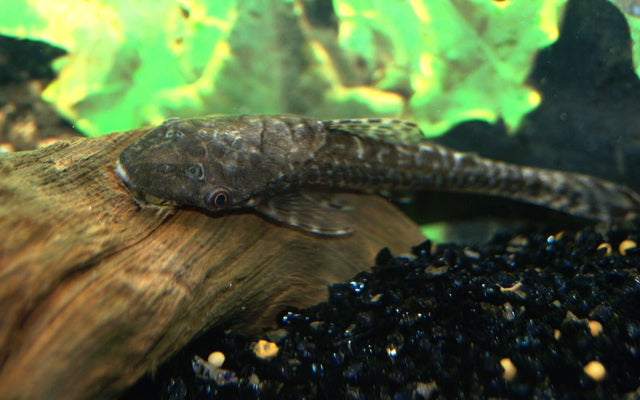
The Giant Otocinclus ( Hypoptopoma gulare ) is an exceptional, rare wild-caught fish from the Amazon region of Peru and Brazil. It resembles the well-known Otocinclus species, but grows significantly larger and more robust. With its soft, light brown markings and calm, steady movement along the aquarium glass, it is a fascinating fish to observe – ideal for naturalistic South American aquariums.
The Hypoptopoma gulare grows to about 7–8 cm in length and is one of the most peaceful armored catfish. It lives in groups and prefers oxygen-rich, soft water and a gentle current. As an effective grazer, it provides valuable assistance in algae control in aquariums.
🌿 Characteristics & Attitude:
🐠 Fish size: L (5–7 cm)
🌎 Origin: Peru & Brazil (Amazon region) – Wild caught
🌡️ Temperature: 23-28°C
💧 pH value: 6.0–7.5
⚖️ Total hardness: up to 15 °dGH
🐟 Social behavior: Peaceful, schooling fish (from 4-5 animals)
🌾 Aquarium: From 120 liters, with current, roots, plants & sandy substrate
🍽️ Feeding:
Hypoptopoma gulare feeds primarily on biofilm, algae, and plant matter. In aquariums, it also accepts spirulina, seaweed wafers, vegetable chips, blanched spinach, zucchini, or cucumber. Frozen foods such as cyclops or brine shrimp can be offered as a supplement.
💡 Tip:
A well-planted, oxygen-rich aquarium with fine substrate and a gentle current provides ideal living conditions. A group of several animals exhibits particularly natural and interesting behavior.
👉 Conclusion:
The giant otocinclus ( Hypoptopoma gulare ) is a peaceful, rare wild-caught and useful algae eater – perfect for lovers of natural South American aquariums and friends of calm, social catfish.
Split