AquariumAquaristik
L067 Lot Spot Pleco – Pseudancistrus asurini | Rare wild-caught specimen with striking spotted pattern
L067 Lot Spot Pleco – Pseudancistrus asurini | Rare wild-caught specimen with striking spotted pattern
Couldn't load pickup availability
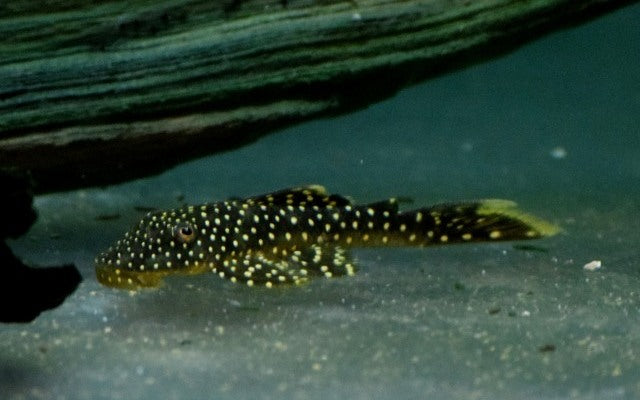
The L067 Lot Spot Pleco ( Pseudancistrus asurini ) is an exceptionally beautiful, rare wild-caught specimen from the Rio Xingu in Brazil. With its dark brown to black body, covered with numerous light spots and orange fin edges, it is one of the most attractive representatives of its genus.
The L067 remains medium-sized, reaching a final length of around 15–18 cm, and is a calm yet strong-willed inhabitant. It is slightly territorial towards its own kind but peaceful towards other fish species. Its spotted pattern is particularly striking in aquariums with a current and high oxygen levels.
🌿 Characteristics & Attitude:
🐠 Fish size: M/L (8–10 cm)
🌎 Origin: Brazil (Rio Xingu) – Wild caught
🌡️ Temperature: 26-30°C
💧 pH value: 6.0–7.5
⚖️ Total hardness: up to 20 °dGH
🐟 Social behavior: Peaceful, slightly territorial towards other members of their species
🌾 Aquarium: From 250 liters, with roots, stones, caves & strong current
🍽️ Feeding:
The Pseudancistrus asurini (L067) is an omnivore with a preference for algae and plant matter. It rasps on algae and wood fibers and readily accepts spirulina, seaweed wafers, vegetable chips, zucchini, cucumber, and frozen foods (e.g., brine shrimp, mysis shrimp). A varied diet promotes vitality and vibrant colors.
💡 Tip:
A well-structured, oxygen-rich aquarium with a current and plenty of hiding places is ideal. The bright spots and fin edges of the L067 shine particularly brightly against a dark substrate and under soft lighting.
👉 Conclusion:
The L067 Lot Spot Pleco ( Pseudancistrus asurini ) is a rare, magnificently patterned wild-caught fish with a distinctive spot pattern – perfect for lovers of exceptional Pseudancistrus species and structured South American aquariums.
Split